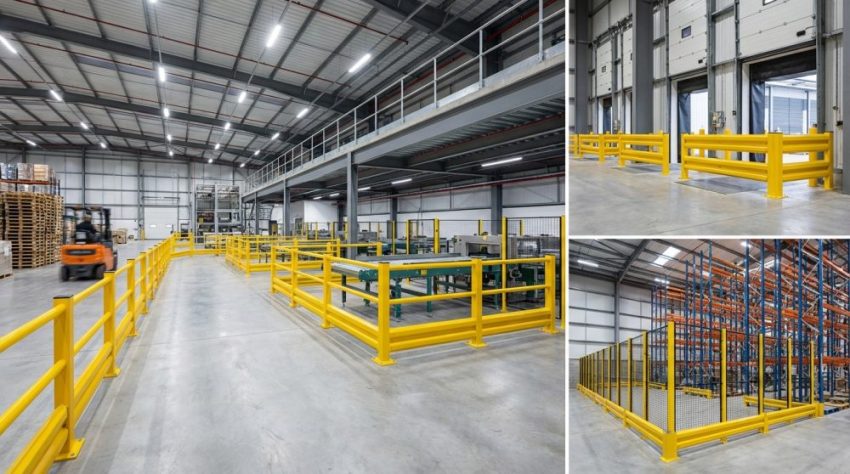
5 Critical Areas in Your Warehouse That Need Safety Guardrail Protection
The modern warehouse is a symphony of movement. Between forklifts zipping around corners, automated guided vehicles (AGVs) transporting pallets, and employees managing inventory, your facility is a hub of constant activity. However, this high-paced environment brings inherent risks. One slip-up, one wide turn, or one moment of distraction can lead to damaged inventory, expensive equipment repairs, or, worst of all, employee injury.
While training and floor tape are essential, they are merely visual deterrents. When it comes to stopping a 9,000-pound forklift, you need a physical barrier. Safety guardrails are your facility’s silent bodyguards, standing between moving machinery and your most valuable assets. But where should you install them for maximum impact?
If you are auditing your facility for safety upgrades, here are the 5 critical areas that demand sturdy guardrail protection immediately.
1. Rack End Rows (The “Turn-Around” Zones)
If you examine the accident logs of most warehouses, you will find a common theme: rack damage usually occurs at the ends of the aisles. As forklift operators race against the clock to move pallets, they often cut corners too close when turning from a main thoroughfare into an aisle.
Without protection, a forklift impact can buckle the upright column of a racking system. This doesn’t just damage one rack; it can compromise the structural integrity of the entire row, leading to a catastrophic “domino effect” collapse.
Why you need guardrails here:
- Structural Integrity: Heavy-duty end-of-aisle guards deflect impacts away from the uprights.
- Cost Savings: Replacing a guardrail is significantly cheaper and faster than unloading and replacing a damaged rack upright.
2. Pedestrian Walkways and Break Areas
The most precious asset in your warehouse is your workforce. Mixing heavy machinery traffic with pedestrian foot traffic is a recipe for disaster. While painted lines on the floor indicate where people should walk, they offer zero protection if a forklift driver loses control or takes a turn too wide.
Installing guardrails along designated walkways creates a definitive “Safe Zone.” It physically separates man from machine, ensuring that even if an accident occurs, the vehicle strikes steel rather than a person.
Key locations for pedestrian barriers:
- Pathways leading to and from restrooms and breakrooms.
- Exits and entrances to the warehouse floor.
- Time clock stations where employees gather.
3. Loading Docks and Shipping Doors
The loading dock is notoriously the most dangerous area in any warehouse. It is a high-pressure environment with trucks reversing, forklifts maneuvering in tight spaces, and sudden changes in lighting conditions. There is a high risk of forklifts accidentally driving off the edge of an open dock door (a roughly 4-foot drop) or backing into door tracks.
Guardrails here serve a dual purpose. First, they protect the expensive overhead door tracks from being crushed by passing machinery. Second, removable or gate-style guardrails prevent falls from open ledges when trucks are not present.
4. In-Plant Offices and Modular Buildings
Many warehouses utilize modular offices right on the production floor to house supervisors, shipping clerks, or inventory managers. These structures are typically made of lightweight materials like aluminum and drywall—materials that offer no resistance to a forklift fork or counterweight.
Placing heavy-duty guardrails around the perimeter of these in-plant offices is non-negotiable. It protects not only the structure itself but also the unsuspecting administrative staff working inside who may not be wearing PPE (Personal Protective Equipment).
5. Critical Machinery, Electrical Panels, and Utilities
Every warehouse has a “heartbeat”—specific equipment that, if damaged, shuts down the entire operation. This includes conveyor belt motors, robotic arms, shrink-wrap machines, main electrical panels, and sprinkler risers.
If a forklift backs into a main electrical panel, you aren’t just looking at repair costs; you are looking at potential fires, electrocution risks, and hours (or days) of total facility downtime. Protecting these utility areas ensures business continuity.
Don’t forget to protect:
- Building Columns: Structural pillars hold up the roof; wrap them in guards.
- Battery Charging Stations: These areas contain hazardous chemicals and expensive chargers.
- Cooling/Heating Units: Floor-mounted HVAC equipment is easily damaged by low-riding forks.
Conclusion: An Investment in Uptime
It is easy to look at the upfront cost of steel guardrails and hesitate. However, when you compare the price of a guardrail to the cost of a lawsuit, a collapsed rack system, or indefinite downtime, the math becomes clear. Guardrails are not just a safety expense; they are an investment in operational continuity and peace of mind.
Take action today: Walk your warehouse floor. Look for scuff marks on racks, chipped paint on walls, or areas where pedestrians look nervous near forklifts. These are your red flags. Install protection now, and secure your facility for the future.