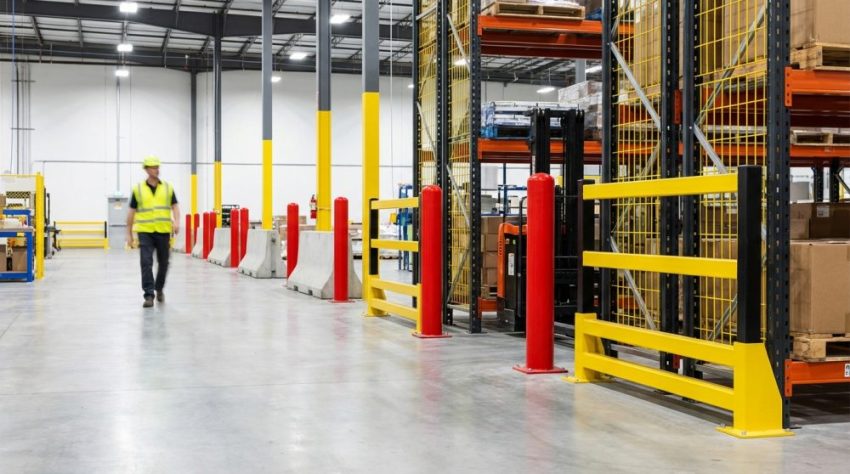
Warehouse Safety Essentials: A Guide to Guardrails, Bollards, and Barriers
The modern warehouse is a symphony of movement. Forklifts zip around corners, pallet jacks transport heavy loads, and employees navigate aisles to pick and pack orders. In this high-energy environment, efficiency is king—but safety is the crown jewel. Without proper physical safeguards, that symphony can quickly turn into chaos.
While training and protocols are vital, physical protection is the only thing standing between a heavy piece of machinery and a catastrophic accident. In this guide, we dive deep into the “Big Three” of warehouse infrastructure safety: Guardrails, Bollards, and Barriers. Let’s explore how to deploy them effectively to protect your people, your inventory, and your bottom line.
1. Guardrails: The First Line of Defense
Guardrails are the backbone of a comprehensive facility safety plan. They serve a dual purpose: they act as a visual deterrent to drivers and a physical shield against impact.
Where to Install Them:
- Pedestrian Walkways: The most critical application is separating human traffic from forklift traffic. A heavy-duty guardrail creates a “safe zone” for employees, preventing them from accidentally stepping into a vehicle lane.
- Rack End Protectors: The ends of pallet racking rows are notoriously prone to forklift strikes. A damaged upright can compromise the structural integrity of an entire rack, leading to collapse. Guardrails wrapped around rack ends are essential insurance.
- Office & Breakroom Perimeters: If you have modular offices or break areas on the warehouse floor, guardrails act as a bumper against vehicle impacts.
Pro Tip: When selecting guardrails, look for impact ratings. Not all rails are created equal; ensure the steel gauge is sufficient to withstand the weight and speed of your specific material handling equipment.
2. Bollards: The Heavy-Duty Sentinels
While guardrails guide traffic, bollards are designed to stop it dead in its tracks. These vertical posts—usually made of steel and filled with concrete—are your facility’s “sentinels,” placed in areas where high-impact protection is necessary.
Key Applications:
- Door Track Protection: Overhead door tracks are magnets for forklift damage. A bollard placed on either side of the door frame protects the tracks, ensuring your shipping and receiving doors remain operational.
- Building Corners & Utilities: Sharp turns are dangerous. Bollards placed at building corners, near gas meters, electrical panels, or fire suppression systems prevent accidental clips that could shut down facility operations.
- Loading Docks: Bollards can effectively prevent trucks from backing too far or protect the edges of the dock from accidental drive-offs.
Bollards come in various forms, including core-drilled (embedded in the floor) and base-plate mounted. For maximum stopping power, core-drilled concrete-filled bollards are the industry gold standard.
3. Safety Barriers and Gates: Managing the Flow
Sometimes, safety isn’t just about stopping an impact; it’s about controlling access. This is where expandable barriers, swing gates, and polymer barriers come into play.
- Mezzanine Safety Gates: If you move pallets to a second level, an automatic safety gate is non-negotiable to prevent falls during loading and unloading.
- Aisle Gates: Temporary expandable barriers are perfect for closing off aisles during maintenance or when a forklift is operating in a narrow space.
- Polymer Barriers: A modern alternative to steel, flexible polymer barriers absorb impact and return to their original shape. They are excellent for lower-speed areas and reduce damage to the floor since the energy is absorbed rather than transferred to the anchors.
The ROI of Safety
It is easy to look at the cost of steel and installation and hesitate. However, consider the alternative. The cost of a single accident involving a forklift can include:
- Workers’ compensation claims and medical expenses.
- OSHA fines and legal fees.
- Damage to expensive inventory and machinery.
- Downtime and lost productivity.
Investing in guardrails, bollards, and barriers is not just an operational expense—it is an investment in business continuity.
Conclusion: Build a Fortified Warehouse
A safe warehouse is an efficient warehouse. By strategically implementing guardrails to define paths, bollards to protect critical infrastructure, and barriers to manage flow, you create an environment where employees feel safe and operations run smoothly.
Don’t wait for a “near-miss” to become an accident. Walk your warehouse floor today, identify the high-risk zones, and fortify your facility with the essentials.