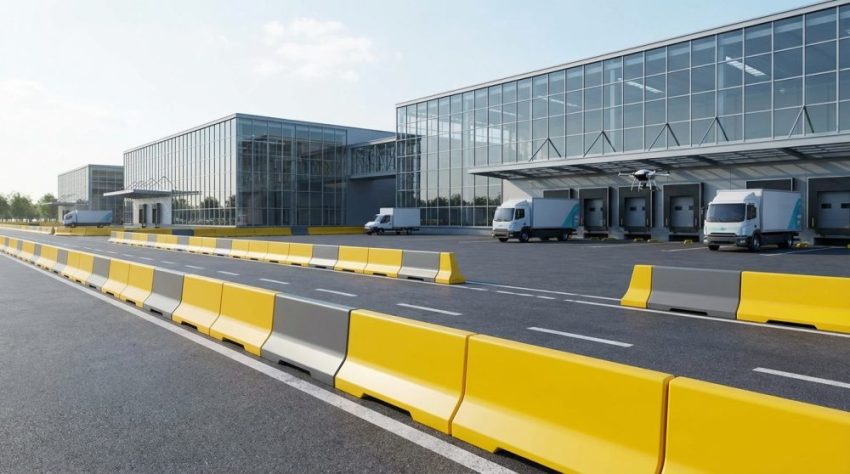
The Future of Facility Protection: Why Your Logistics Hub Needs Polymer Barriers
In the high-stakes, high-speed world of modern logistics, the warehouse floor is a battlefield. Forklifts zip around corners, automated guided vehicles (AGVs) navigate complex paths, and the pressure to reduce turnaround times is higher than ever. Amidst this controlled chaos, the safety of your infrastructure, your equipment, and—most importantly—your people, is paramount.
For decades, the industry standard for impact protection was simple: heavy steel guardrails. They were strong, imposing, and familiar. But as logistics hubs evolve into smarter, faster environments, the protective measures we use must evolve too. Enter flexible polymer barriers.
This isn’t just a change in material; it is a shift in philosophy. Here is why the most forward-thinking logistics hubs are ripping out metal and installing polymer, and why your facility needs to follow suit to stay competitive.
1. The Physics of Impact: Absorption vs. Resistance
To understand why polymer is superior, you have to look at what happens during a crash. When a 4-ton forklift hits a traditional steel barrier, the energy has to go somewhere.
Steel is rigid. It fights the impact. Often, the barrier will crumple, but much of that shock is transferred directly into the floor fixings. This results in concrete damage, ripped-out anchors, and expensive floor repairs. In a worst-case scenario, the barrier holds, but the impact force is reflected back into the vehicle, injuring the driver and damaging the forklift.
Polymer barriers work differently. They are engineered with “memory.” When hit, the barrier:
- Flexes on impact to absorb the kinetic energy.
- Dissipates the force through the material rather than into the floor.
- Returns to its original shape immediately after the impact.
The result? The floor stays intact, the driver experiences less shock, and the barrier is ready for the next hit instantly.
2. The End of the “Paint and Repair” Cycle
Walk into any older warehouse, and you will see the scars of battle: dented steel rails, flaking yellow paint, and patches of rust. Keeping steel barriers looking professional and highly visible requires a constant cycle of maintenance. They need sanding, repainting, and frequently, total replacement after a minor collision renders them structurally unsound.
Polymer barriers eliminate this headache entirely. The material is:
- Self-colored: The high-visibility safety yellow (or other colors) runs all the way through the material. A scratch doesn’t reveal bare metal; it just reveals more yellow.
- Corrosion-free: They are impervious to water, chemical spills, and rust.
- Low maintenance: A quick wipe-down is usually all that is needed to keep them looking brand new.
3. Protecting Your Floors (and Your Wallet)
Facility managers know that floor repairs are a logistic nightmare. Fixing a chunk of concrete torn out by a steel barrier anchor requires downtime, dust barriers, and curing time. During that period, that section of your hub is dead weight.
Because polymer barriers absorb energy, they exert significantly less torque on floor anchors. This preserves your facility’s substrate. While the upfront cost of polymer can sometimes be higher than cheap steel, the Total Cost of Ownership (TCO) is drastically lower. When you factor in the elimination of floor repairs, repainting costs, and replacement parts, polymer pays for itself after just a few impacts.
4. Hygiene and Aesthetics in Modern Supply Chains
As logistics hubs handle more food, pharmaceuticals, and sensitive electronics, hygiene becomes a critical factor. Steel barriers can shed paint chips into products and harbor bacteria in rusty crevices.
Polymer creates a sealed, cleanable surface suitable for HACCP-compliant environments. Furthermore, the aesthetics matter. A facility fitted with sleek, bright polymer barriers looks modern, safe, and well-managed. It sends a message to investors, clients, and employees that you value quality and safety.
5. Sustainability and Carbon Footprint
The future of logistics is green, and your infrastructure contributes to your carbon footprint. Polymer barriers offer surprising sustainability benefits:
- Lighter Transport: Being significantly lighter than steel, shipping polymer barriers to your site requires less fuel and produces fewer emissions.
- Recyclability: Many high-end polymer barrier systems are 100% recyclable at the end of their long lifespan.
- Longevity: Because they survive impacts that would destroy steel, you manufacture and dispose of fewer barriers over the life of the facility.
Conclusion: The Smart Switch
Clinging to steel barriers in a modern logistics hub is like using a typewriter in a digital office. It might still work, but it is inefficient, costly, and outdated.
The transition to polymer barriers represents a commitment to operational efficiency, employee safety, and long-term cost savings. As automation speeds up and supply chains tighten, you cannot afford downtime caused by damaged infrastructure. By upgrading to polymer, you aren’t just installing a fence; you are future-proofing your facility.