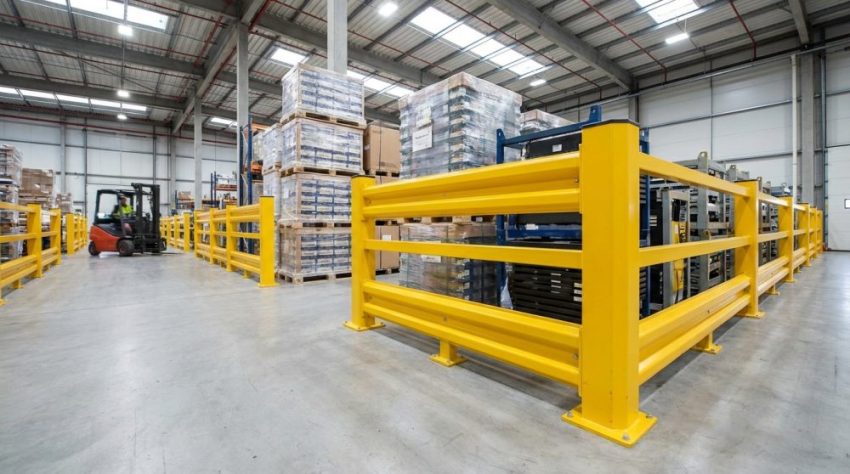
Protecting Your Assets: Why Heavy-Duty Safety Barriers Are Vital for Warehouses
The modern warehouse is a hub of frenetic energy. It is a choreographed dance of forklifts, pallet jacks, automated guided vehicles (AGVs), and foot traffic, all moving with urgency to meet tight shipping deadlines. However, in this environment of “controlled chaos,” the line between maximum efficiency and a catastrophic accident is often thinner than we’d like to admit.
While training and signage are essential, they rely on human behavior. To truly safeguard your facility, you need physical solutions that don’t make mistakes. This is where heavy-duty safety barriers come into play. They are not just metal rails; they are the silent sentinels protecting your inventory, your infrastructure, and most importantly, your people.
Here is why investing in robust safety barriers is not just a safety requirement, but a smart business strategy.
1. Separating Man from Machine
The most critical asset in any warehouse is the workforce. Forklift accidents remain one of the leading causes of serious injury in the logistics sector. When a heavy piece of machinery meets a pedestrian, the results are tragic.
Heavy-duty barriers provide a physical segregation between designated walkways and vehicle traffic lanes. Unlike painted lines on the floor, which can be ignored or faded, a steel or polymer barrier forces compliance. It ensures that even if a driver loses control or a pedestrian is distracted, a physical shield prevents contact.
2. Protecting Critical Infrastructure
Warehouses are held up by columns, and inventory is held up by racking systems. A single low-speed impact from a fully loaded forklift can compromise the structural integrity of a racking upright or a building column. The “domino effect” of a rack collapse is a nightmare scenario that every facility manager fears.
Installing heavy-duty barriers, specifically rack guards and column protectors, serves two purposes:
- Impact Absorption: They absorb the kinetic energy of a collision, preventing it from transferring to the building structure.
- Deflection: Many modern barriers are designed to deflect glancing blows, guiding the vehicle back into its lane rather than stopping it dead.
3. Reducing Downtime and Repair Costs
When an accident occurs, the cost isn’t limited to the damaged item. You must also consider the hidden costs of downtime. If a high-speed door is rammed, a conveyor belt is hit, or an electrical panel is damaged, operations may grind to a halt.
Think of safety barriers as an insurance policy with a 100% payout rate. The cost of replacing a damaged barrier section is a fraction of the cost of:
- Replacing a $50,000 piece of machinery.
- Halting a production line for three days.
- Dealing with OSHA fines and investigation paperwork.
4. Securing Inventory Assets
In the age of e-commerce, inventory turnover is high, and the value of goods stored in warehouses is skyrocketing. Accidental collisions can result in thousands of dollars of damaged stock. Heavy-duty barriers at the ends of racking aisles prevent “corner cutting” by drivers—a common habit that often results in sliced merchandise or toppled pallets.
Choosing the Right Barrier: Steel vs. Polymer
When selecting your protection, you generally have two choices, both of which have their place in a modern facility:
Traditional Steel: Known for its rigidity and strength. It stops vehicles in their tracks. It is ideal for protecting building perimeters and outdoor docks.
Flexible Polymer: These barriers are gaining immense popularity. They are designed to flex on impact and return to their original shape. While the initial investment might be higher, the maintenance cost is near zero because you don’t have to replace them after minor impacts, and they are less likely to damage the warehouse floor upon impact.
Conclusion: An Investment in Longevity
A warehouse without barriers is a warehouse relying on luck. By installing heavy-duty safety barriers, you are sending a clear message: safety is non-negotiable.
Whether you are retrofitting an old facility or designing a new distribution center, prioritize physical protection. It preserves your infrastructure, protects your bottom line, and ensures your team goes home safe at the end of every shift. Don’t wait for an accident to reveal the weak points in your facility—fortify them today.