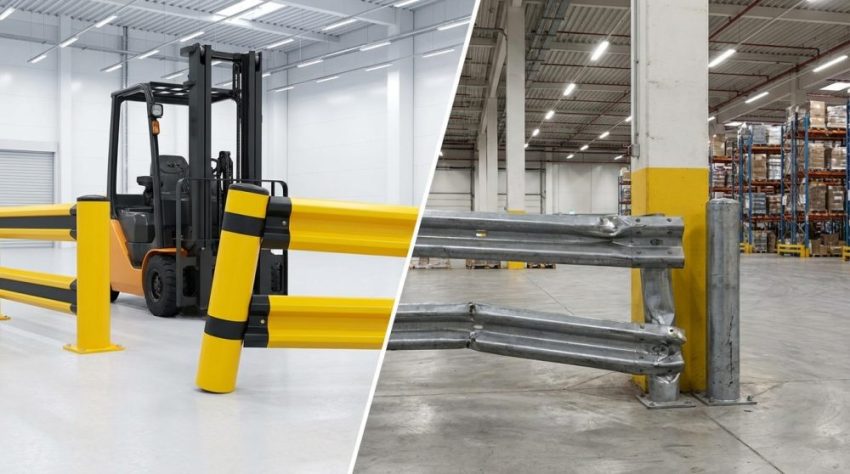
Polymer vs. Steel: Why Logistics Facilities Are Switching to Flexible Protection
If you work in logistics, manufacturing, or warehousing, you know the sound. The screech of tires, a dull thud, and the sickening crunch of metal on metal. Forklift accidents happen. In fact, in the high-speed environment of modern fulfillment centers, impacts aren’t just a possibility—they are an inevitability.
For decades, the solution to protecting infrastructure, machinery, and people was simple: Steel. It was heavy, rigid, and looked tough. But as logistics facilities become smarter, faster, and more efficient, traditional steel barriers are increasingly becoming the weak link in the safety chain. A quiet revolution is taking place on the warehouse floor, and it is made of plastic.
Here is why forward-thinking facility managers are swapping rigid steel for flexible polymer protection systems.
1. The Physics of Impact: Deflection vs. Absorption
To understand why polymer is winning, you have to look at the physics of a crash. The fundamental difference between steel and polymer lies in how they handle energy.
Steel barriers are rigid. When a 5-ton forklift hits a steel guardrail, the barrier resists the force. However, energy has to go somewhere. Since the steel won’t give, the energy is transferred instantly to the path of least resistance: the floor anchors.
Polymer barriers are flexible. Engineered polymers are designed to have “memory.” When a vehicle hits a flexible barrier, the material bends, absorbing the kinetic energy of the impact. Once the vehicle pulls away, the barrier reforms to its original shape.
2. Saving the Floor (and the Budget)
The hidden cost of steel protection isn’t the barrier itself; it’s the concrete beneath it. Because rigid steel transfers impact energy into the floor, a collision often results in:
- Spalled concrete: The anchors rip out of the ground, taking chunks of the floor with them.
- Structural damage: Cracks can spread from the impact zone, compromising the slab.
- Downtime: Repairing a floor requires clearing the area, pouring new concrete, and waiting for it to cure.
With flexible polymer, the energy is dissipated through the material itself rather than the fixings. This means the floor remains intact, even after significant impacts, saving thousands in concrete repair bills.
3. The Maintenance Myth: Paint vs. Pigment
Walk through a facility with five-year-old steel barriers, and you will see a familiar sight: rust, dents, and flaking paint. Steel requires constant upkeep to remain visible and hygienic (especially in food and beverage logistics).
Polymer barriers offer a distinct advantage here:
- Self-colored material: The high-visibility yellow is not a coat of paint; it is pigmented all the way through the plastic. scratches don’t show, and rust is impossible.
- Wash-down ready: Polymer is chemical resistant and non-corrosive, making it ideal for harsh environments or clean rooms.
- No repainting: You can retire the paintbrush and allocate your maintenance budget elsewhere.
4. Protecting the Vehicle and Driver
Safety isn’t just about the building; it is about the people and equipment operating within it. A collision with a rigid steel post is a jarring, whiplash-inducing event for a forklift operator. The shock can also damage the vehicle’s internal electronics and alignment.
Because flexible barriers absorb the blow, they act as a cushion. This “soft” impact significantly reduces the physical trauma to the driver and minimizes expensive damage to the forklift itself.
5. The ROI Equation
Skeptics often point out that the upfront cost of engineered polymer can be higher than standard fabricated steel. However, the Total Cost of Ownership (TCO) tells a different story.
When you calculate the cost of a protection system over five years, you must include:
- Replacement costs for bent steel barriers.
- Concrete floor repairs.
- Repainting labor and materials.
- Vehicle repair costs.
When these variables are factored in, flexible polymer systems typically offer a return on investment within 12 to 24 months. Steel is a sunk cost; polymer is a long-term asset.
Conclusion: The Future is Flexible
Steel will always have its place in construction, but when it comes to traffic management and impact protection, its reign is ending. Modern logistics facilities demand durability, low maintenance, and high safety standards.
Switching to flexible polymer protection isn’t just about installing a guardrail; it’s about installing resilience. By embracing flexibility, facility managers are ensuring that when the inevitable impact happens, their operations can bounce back—literally.