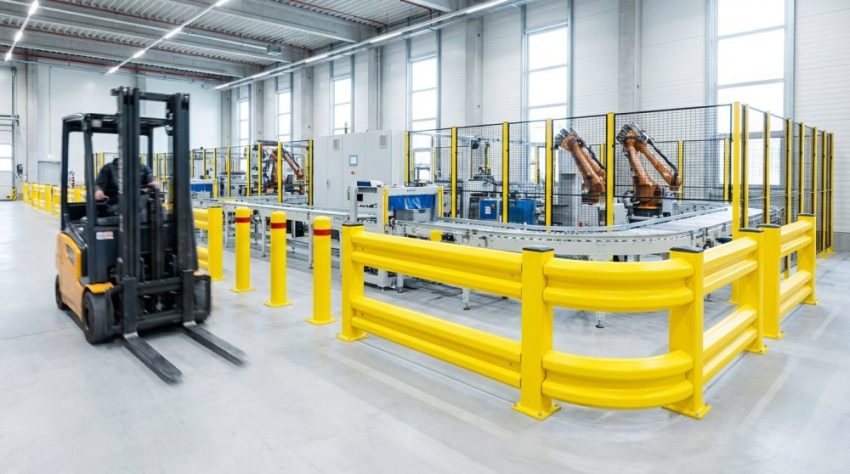
Maximizing Operational Efficiency with Advanced Polymer Impact Barriers
In the high-stakes world of logistics, manufacturing, and warehousing, the margin for error is razor-thin. Operations managers are constantly balancing speed with safety, seeking to maximize throughput without compromising the well-being of their workforce or the integrity of their infrastructure. While automated guided vehicles (AGVs) and warehouse management systems often steal the headlines, a silent revolution is happening at ground level: the shift from traditional steel guardrails to advanced polymer impact barriers.
This isn’t just a safety upgrade; it is a strategic move toward operational excellence. Here is how flexible polymer barriers are redefining efficiency in modern facilities.
The Hidden Costs of Rigid Protection
For decades, steel has been the industry standard. It looks strong, and it feels permanent. However, in a dynamic environment involving forklifts and heavy machinery, steel’s rigidity is its greatest weakness. When a 5-ton forklift impacts a steel rail, the energy has nowhere to go. The result is a crumpled barrier, a damaged vehicle, and, frequently, a ripped-up concrete floor where the fixings have been torn out.
This leads to the “Downtime Cycle”:
- Immediate Stoppage: Operations in that aisle must halt.
- Repair Logistics: Maintenance crews are diverted from preventative work to emergency repairs.
- Floor Resurfacing: Costly concrete repair is often required before a new barrier can be installed.
- Recurring Costs: Constant painting and replacement drain the maintenance budget.
The Science of “Bouncing Back”
Advanced polymer barriers are engineered differently. Utilizing high-performance synthetic materials, these barriers are designed with inherent memory. Instead of resisting impact force rigidly, they absorb and dissipate it.
When a vehicle hits a polymer barrier, the material flexes to absorb the kinetic energy and then reforms to its original shape. This elastic behavior transforms a collision from a catastrophic maintenance event into a minor, non-disruptive incident.
Key Efficiency Drivers
Implementing polymer protection systems directly impacts your bottom line through several efficiency vectors:
1. Elimination of Repair Downtime
Because the barrier self-recovers after impact, there is no need to stop operations to replace bent metal. Your traffic flow remains continuous, and your throughput targets remain on track. The barrier is ready for the next impact immediately.
2. Preservation of Floor Slabs
Floor damage is one of the most expensive facility repairs. Rigid steel transfers the shock of impact directly into the floor anchors, cracking the concrete. Polymer barriers spread that energy through the material itself, leaving your floor—and your anchors—intact. This significantly extends the lifespan of your facility’s infrastructure.
3. Reduced Wear on Material Handling Equipment (MHE)
The impact absorption works both ways. Just as the barrier is protected, the forklift experiences less shock during a collision. This results in less damage to the vehicle’s chassis and sensitive onboard electronics, reducing your fleet maintenance costs.
4. Zero-Maintenance Aesthetics
Polymer barriers are typically colored all the way through the material (often in high-visibility safety yellow). They do not rust, corrode, or scratch effectively. This eliminates the need for repainting, allowing your maintenance team to focus on value-add tasks rather than facility cosmetics.
Calculating the ROI
While the upfront cost of advanced polymer barriers may be higher than commodity steel, the Total Cost of Ownership (TCO) tells a different story. When you factor in the elimination of replacement parts, the reduction in floor repairs, and the prevention of operational downtime, the return on investment is often realized within the first year of installation.
Conclusion
In the quest for a leaner, more efficient facility, every component of your infrastructure must perform. Traditional steel barriers are passive assets that become liabilities the moment they are hit. Advanced polymer impact barriers are active assets that work with your operation, absorbing errors and keeping your supply chain moving.
By upgrading to flexible protection systems, you aren’t just buying a barrier; you are investing in uptime, longevity, and a smarter way to work.