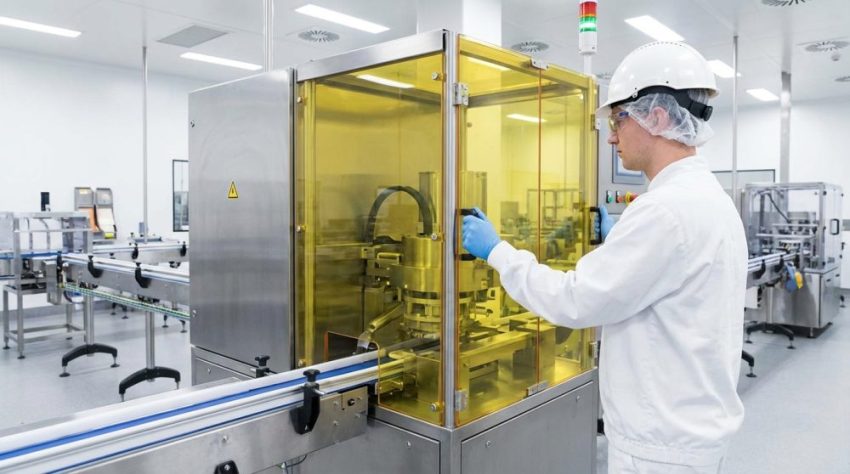
Machine Guarding Compliance: Ensuring Worker Safety in the Food and Beverage Industry
The Food and Beverage (F&B) manufacturing sector is a high-speed, high-volume environment. From industrial mixers churning out dough to high-velocity bottling lines and automated packaging systems, the machinery used to put food on our tables is powerful and relentless. However, with great power comes significant risk.
Machine guarding is often the only barrier between a worker and a catastrophic injury. In the F&B industry, compliance is not just about avoiding OSHA fines; it is about protecting your most valuable asset—your people—while maintaining the highest standards of food hygiene. In this guide, we explore the unique challenges of machine guarding in food production and how to achieve a safety culture that enhances, rather than hinders, productivity.
The Intersection of Safety and Sanitation
In most manufacturing sectors, a machine guard is simply a physical barrier. In the Food and Beverage industry, it is much more complex. Guards must protect workers from hazards like pinch points and rotating parts, but they must also comply with rigorous sanitation standards.
This creates a unique “dual challenge”:
- Worker Safety: Preventing amputations, lacerations, and crushing injuries.
- Food Safety: Preventing biological, chemical, or physical contamination.
If a machine guard traps food debris, rusts due to harsh washdowns, or prevents proper cleaning, it becomes a food safety liability. Therefore, compliance in this sector requires a holistic approach that satisfies both OSHA (Occupational Safety and Health Administration) and FDA (Food and Drug Administration) requirements.
Understanding the Regulatory Landscape
According to OSHA, machine guarding violations frequently appear in the top 10 list of most cited violations annually. The primary standard, 29 CFR 1910.212, covers general requirements for all machines. For the F&B industry, ignoring these regulations can lead to severe consequences:
- Employee Trauma: Severe injuries have life-altering consequences for staff and their families.
- Financial Penalties: OSHA fines can reach hundreds of thousands of dollars for willful violations.
- Production Downtime: Accidents inevitably lead to line stoppages and investigations.
- Reputational Damage: News of unsafe working conditions can tarnish a brand’s image.
Key Danger Zones in Food Processing
To implement effective guarding, you must first identify where the hazards live. While every facility is different, common danger zones in F&B include:
1. Conveyors and Belts
Used extensively for moving product, conveyors present nip points where clothing or limbs can get pulled into rollers.
2. Mixers and Blenders
Industrial mixers use high-torque rotating blades. The temptation to reach in to clear a jam or add ingredients while the machine is running is a major cause of injury.
3. Slicers, Cutters, and Grinders
Sharp, fast-moving blades require rigorous guarding, often involving interlocks that stop the blade immediately if a guard is opened.
4. Packaging and Palletizing
Robotic arms and automated wrappers move quickly and unpredictably. Perimeter guarding is essential to keep workers out of the robot’s operational envelope.
Best Practices for F&B Machine Guarding
Achieving compliance requires a strategic approach. Here are the best practices for ensuring your facility is safe and sanitary.
1. Prioritize Hygienic Design
Standard fencing used in automotive plants won’t work in a meat processing facility. You need guards designed for washdown environments. Look for:
- Stainless Steel Construction: Resistant to corrosion from water and caustic cleaning chemicals.
- Sloped Surfaces: To prevent water pooling and bacterial growth.
- Open Mesh or Standoffs: Ensuring that cleaning sprays can reach behind the guard to wash away debris.
2. Implement Smart Interlocks
Fixed guards are great, but access is often needed for maintenance or clearing jams. Interlocking guards ensure that if a gate is opened or a barrier removed, the machine loses power immediately. For high-inertia machines (those that take time to stop spinning), guard-locking switches are necessary to keep the gate locked until the machine has come to a complete rest.
3. Conduct Regular Risk Assessments
Compliance is not a “set it and forget it” task. New machinery, changes in production lines, or modified workflows can introduce new hazards. Conduct a risk assessment annually or whenever a process changes to identify gaps in your safety protocols.
4. Don’t Forget Lockout/Tagout (LOTO)
Machine guarding and LOTO go hand-in-hand. Guards protect operators during normal production, while LOTO protects maintenance staff during service. Ensure your team understands the distinction and follows strict LOTO procedures when bypassing guards for repair work.
Conclusion: Safety as a Competitive Advantage
In the Food and Beverage industry, the pressure to meet production quotas is immense. It is easy to view machine guarding as a hindrance to speed or an expensive compliance hurdle. However, the most successful manufacturers view safety differently.
Effective machine guarding reduces downtime caused by accidents, boosts employee morale, and ensures that your product is produced in a clean, controlled environment. By investing in hygienic, compliant machine guarding solutions, you are securing the longevity of your business and, most importantly, ensuring that every worker returns home safely at the end of their shift.
Is your facility fully compliant? Take a walk through your plant floor today with fresh eyes. If you see a hazard, guard it. The cost of prevention is always lower than the price of an accident.