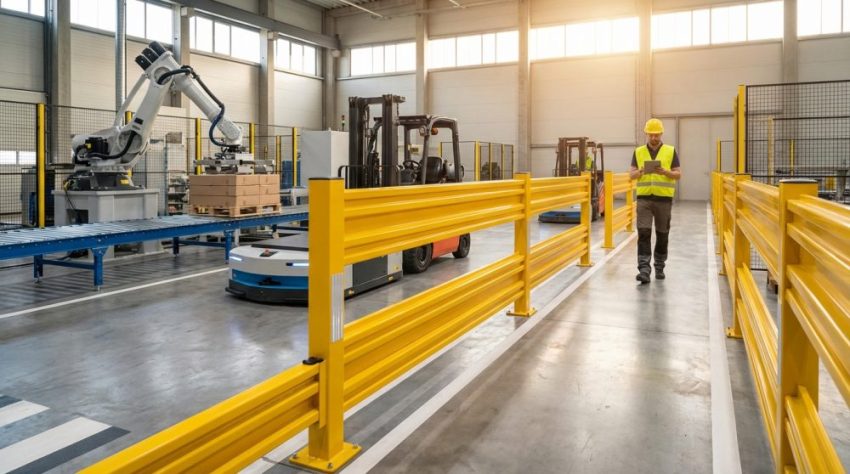
How Industrial Safety Barriers Can Reduce Workplace Accidents and Improve Efficiency
In the high-stakes environment of industrial manufacturing, warehousing, and logistics, the margin for error is razor-thin. Heavy machinery moves alongside pedestrians, inventory is stacked high, and the pace is relentless. In such a dynamic setting, industrial safety barriers are more than just yellow metal or polymer lines in the sand—they are essential components of a profitable, well-oiled machine.
While most facility managers view barriers strictly as a safety compliance requirement, they offer a dual benefit that is often overlooked. Implementing the right barrier systems not only saves lives but also significantly boosts operational efficiency. Here is how investing in robust physical protection transforms the workplace.
1. Creating a Physical Culture of Safety
The primary function of any barrier is protection. However, the mechanism by which they reduce accidents goes beyond simply stopping a forklift from hitting a wall. Barriers enforce a segregation of duties within the workspace.
- Separating Man and Machine: The most common cause of industrial accidents involves collisions between materials handling equipment (like forklifts) and pedestrians. Barriers provide a non-negotiable physical separation, ensuring that foot traffic stays in designated safe zones and vehicles remain in transit lanes.
- Protecting Infrastructure: Accidents aren’t just about people; they are about property. Barriers protect expensive racking systems, machinery, and building columns from structural damage caused by accidental impacts.
- Visual Guidance: High-visibility barriers act as constant visual cues. Even without physical contact, they guide drivers and pedestrians subconsciously, delineating safe paths and hazardous zones.
2. How Safety Translates to Efficiency
There is a misconception that safety protocols slow down operations. In reality, a chaotic floor is an inefficient one. Safety barriers streamline workflows in several key ways:
Optimized Traffic Flow
Just as lanes on a highway allow cars to move faster without fear of head-on collisions, industrial barriers organize facility traffic. When forklift operators have clearly defined lanes protected by barriers, they can navigate the facility with greater confidence and speed, knowing that pedestrians will not step into their path unexpectedly.
Reduction of “Downtime” Events
Consider the cost of a minor accident where a forklift backs into a support column or a machinery control panel. The result is immediate downtime: repairs must be made, accident reports filed, and areas cordoned off. Impact-absorbing barriers prevent these small incidents from becoming operation-halting events. By absorbing the energy of a crash, the barrier keeps the facility running while protecting the asset behind it.
Psychological Safety and Morale
Efficiency is driven by people. Workers who feel unsafe are hesitant, stressed, and prone to mistakes. When an employee knows they are physically protected behind a high-quality barrier system, they can focus entirely on their task. This “psychological safety” leads to higher focus, better morale, and increased output.
3. Choosing the Right Barrier for the Job
Not all barriers are created equal, and choosing the right type is crucial for maximizing both safety and efficiency.
- Traffic Barriers: heavy-duty guardrails designed to withstand high-impact collisions from forklifts and trucks.
- Pedestrian Barriers: Lighter, highly visible handrails that segregate walkways from work zones.
- Bollards: Vertical posts ideal for protecting specific assets like door frames, electrical panels, or corners.
- Flexible Polymer Barriers: A modern solution that absorbs impact and returns to its original shape, reducing the need for floor repairs and repainting.
Conclusion
The installation of industrial safety barriers is an investment that pays dividends in two distinct currencies: human safety and operational throughput. By physically organizing the workspace, protecting critical infrastructure, and giving employees the peace of mind they need to work confidently, barriers transform a chaotic warehouse into a streamlined, efficient facility.
If you are looking to improve your bottom line, start by looking at your floor plan. The barriers you install today could prevent the accident of tomorrow—and improve your efficiency every day in between.